


Are you Birk(in) or Out ?
ISSUES IN INTELLECTUAL PROPERTY LAW (The Birkin Bag Case-study)
The high-end fashion luxury house Hermès is known globally to people from different walks of life. The brand is notoriously known for its exclusivity. Specifically for one of its models, the Birkin, often associated with the culture of being unreachable and with long waitlists, is often criticised, mocked or simply to a degree accepted by consumers of the luxury market. Numerous creations have emerged in the market. Examples range from the printed “Birkin” canvas totes, to technical pieces like the “Boatkin” which repurpose actual bag components, and digital works such as the “MetaBirkin” NFT. Despite their differences, each creation has faced intellectual property infringement claims pursued by Hermès. Cases like these do more than only enrich the database of intellectual property dispute claims. They directly, and often profoundly, highlight the tension between protecting brand integrity and preserving the freedom to make social commentary through fashion. In doing so, they raise important questions about the extent to which intellectual property law should shield established brands, and whether such protection comes at the expense of creativity, critique, and cultural discourse.
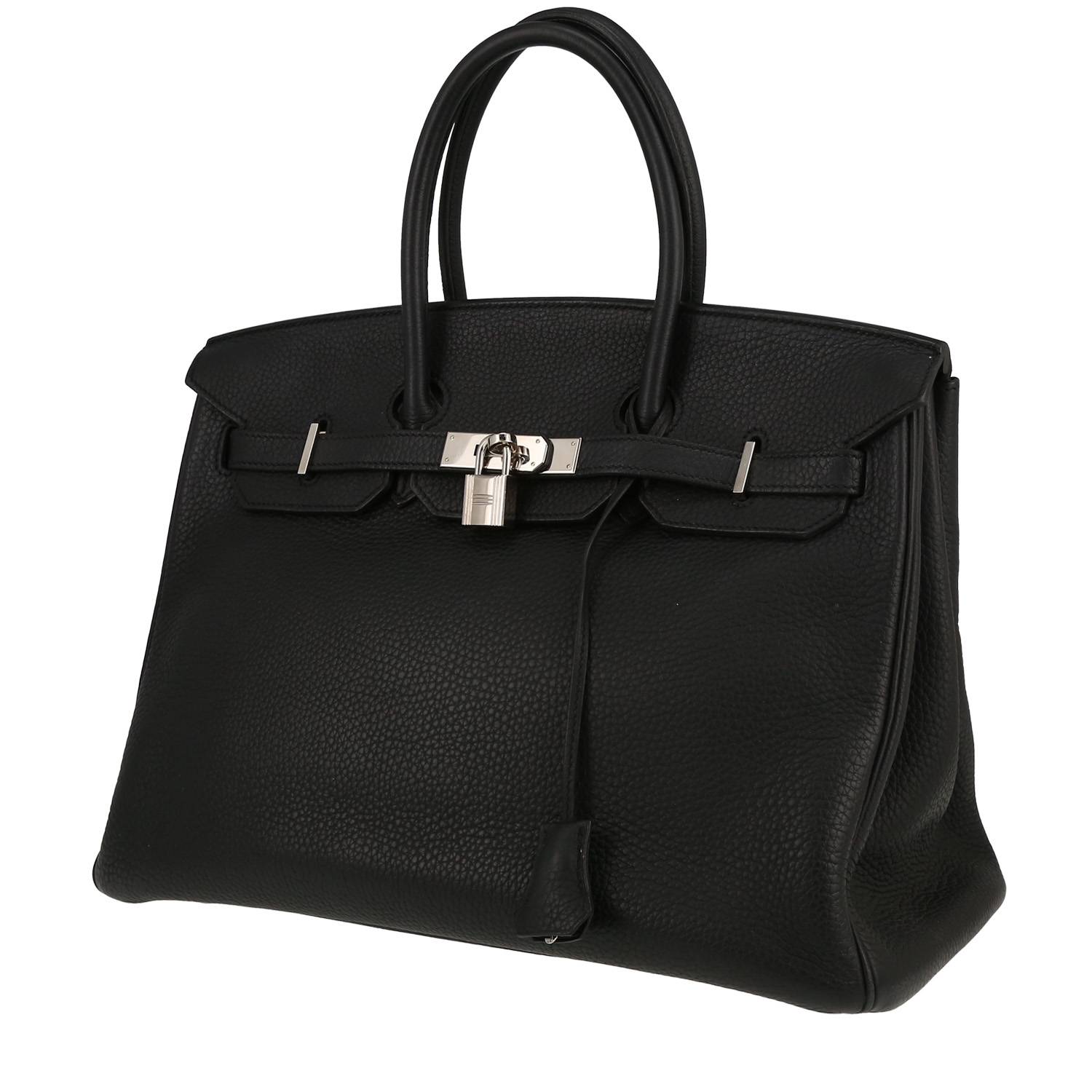
The actual “Birkin” bag by Hermès
BACKGROUND
As a commentary on classism, a Toronto- based designer, Xylem Lorena, created and sold canvas tote bags with a print of the Birkin bag1. The U.S. case of the “Together Bag” mirrored this concept. Both cases were met by a successful infringement claims by Hermès, despite claiming no trademarked or copyrighted materials were used and argued that their works should benefit from the defence of parody and fair use. What if it were not a $50 tote bag, but a digital token of the bag (the MetaBirkin2) or a $1,600 canvas L.L. Bean bag with the iconic Hermès Birkin strap handles, lock and silhouette…introducing the “Boatkin”. This was a bag designed by a Philadelphia label, Hathway Hutton. The artist Jen Risk described it as “quiet luxury with a smirk”3. This viral design posed questions and pushed boundaries between homage and infringement. All these creations faced the claim that the Birkin bag, despite lacking visible word trademarks or tags on its exterior, has achieved secondary meaning. Massive sales, widespread advertising, and pervasive media coverage have made it a renowned design uniquely identified with Hermès4.

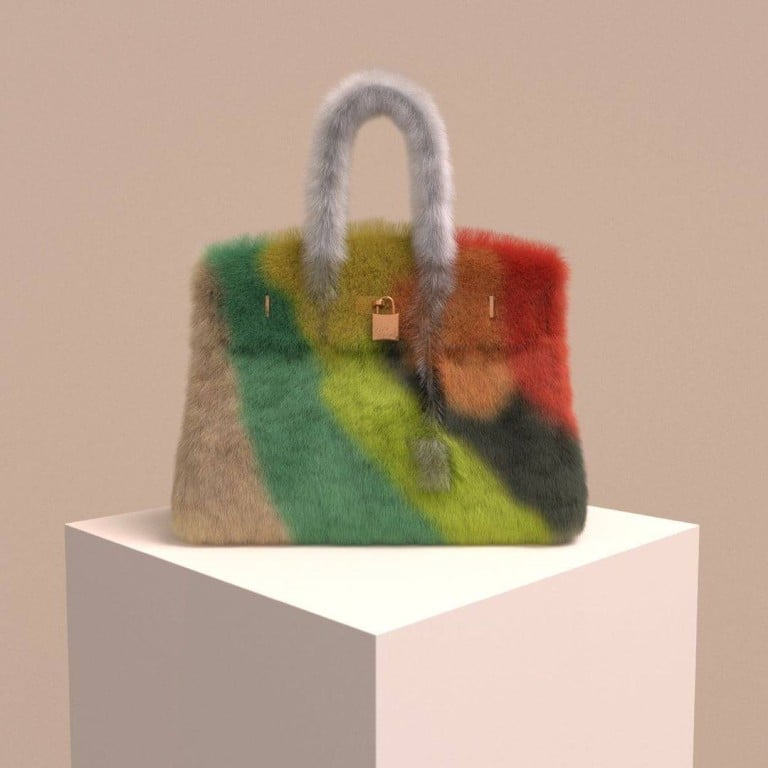

The “Boatkin”
For the purposes of this exercise, I asked different people to draw the Hermès Birkin bag from memory, and the commonalities between the drawings are evident.

Trademark Infringement and Consumer Confusion
The common operating issue in these cases is whether an unauthorised use of a mark causes consumer confusion in regard to the source, sponsorship, or endorsement of a product5. Under s. 6 of the Trademarks Act, infringement occurs when a mark is used in a manner likely to cause confusion with a registered trademark. In their case against Thursday Friday company, Hermès argued that printing the Birkin bag on a canvas tote was “riding on the reputation” of the original and would ultimately lead the public to believe that the tote was licensed by Hermès6. This relates to the concept of passing off, which requires proof of goodwill, deception and damage7. In the Boatkin case, the primary issue concerned the bag’s silhouette, and the hardware mirrors the original so closely that it may cause consumer confusion as to the source, sponsorship, or endorsement of the product.
Trademark Dilution and Depreciation of Goodwill
Under the Trademarks Act, owners of famous marks8 can sue for dilution9, even in cases where there is no immediate consumer confusion. Such an issue arises when a use is seen as diminishing the exclusive fame of the luxury mark, as seen in cases against the Together Bag10.
Turning to the Boatkin, it is a physical object, its design could potentially be viewed as an artistic work. If the Birkin design is protected by copyright, the creation of a “mashup” would engage the sole right of the owner to reproduce the work of any substantial part thereof under s. 3 of the Copyright Act. In this case, the principles of the “first-sale doctrine” were brought forward, since the Boaktin was made of genuine L.L.Bean totes and parts of the Birkin, such as the “hands” and the lock, claiming that Hermès has relinquished control of the subsequent use or resale after the trademarked product was sold. However, the “glaring material difference”, the transformation into a Birkin shape, might override this defence11.
Acquired Distinctiveness and Secondary Meaning
Trademark law protects product designs that have acquired secondary meaning. This relates to the notion that consumers identify the design itself as a brand indicator even without a visible word mark12. In the notable case of Hermès International v Lederer de Paris, Inc. and Pelle Via Rome, the courts held that the barking bag’s specific design has acquired such distinctiveness through sizeable sales and publicity13. However, in many cases, including this one against Hermès or rather brought forward by the historical brand, the common defence by the defendants is that a design is merely “ornamental” or “functional”, and thus not a “designator of source”14. In regard to the Boatkin, as the claim was that the consumer associated the specific shape or silhouette with a single trade source, being the Birkin bag. The appearance, or in these cases the lack of, a Hermès logo on the recreations was irrelevant, making the Birkin bag a classic example of a non-traditional mark that identifies a brand to the public even without a visible logo.
The Parody Defence and Fair Use
Infringement cases that are based on unauthorised use, the question then becomes whether one can constitute a protectable parody under fair use of fair dealing or fair use (in the U.S term). In a similar case deployed by a fashion giant, Louis Vuitton, battling the same issue against the brand My Other Bag, that produced and sold canvas tote bags with caricatures of luxury bags, the court in this case held that such a product will successfully be shilled by the parody defence since, essentially, cheap totes are clearly not the luxury goods they mocked15. The fair dealing defence operates in regard to the market effect, considering whether the new product substitutes the original work in the market16. This defence often hinges on the First Amendment or freedom of expression principles in Canadian jurisdiction, balancing proprietary rights against social commentary.
The creator of the Boatkin described the bag as a “cheeky creation” and “luxury with a smirk”17. In Canadian law, parody is a recognised category of fair dealing under s. 29 of the Copyright Act. As established in the case of United Airlines, Inc. v. Cooperstock, a parody must evoke an existing work while exhibiting noticeable differences for the purpose of mockery or humour18. However, even if a work is a parody, it must still be “fair” based on factors like the amount used and the effect on the original market.
Zealous Litigation in the Name of Copyright and Trademark Protection
While often there is a blurred line in the public’s perception, in simple terms, copyright protects original expression, while trademark protects source identification.
In the case of Xylem Lorena, the Toronto designer of the Birkin print-on canvas bag, argues that his work was protected under fair use as social commentary on classism19. The legal struggle arises when platforms, such as Shopify, often flag such products for using trademark-protected names, rather than just copyrighted imagery20. Intellectual property owners are compelled to guard their marks against unauthorised use or risk of losing their marks. This creates a tension where brands must be “aggressive enforcers” to maintain the strength of their marks, but face being labelled “hyper-litigious” by the public21. In the case of Nike vs By Kiy, the defendant argues that Nike’s failure to police similar trade dress elements used by other luxury brands should limit its ability to enforce those marks22. The issue seems to be: police it or lose it.
Luxury brands like Hermès are often forced into the role of “aggressive enforcers”. Under trademark law, owners must police their marks to prevent them from losing their originality and distinctiveness23. Importantly, with regard to passing off, establishing and sustaining a reputation or secondary meaning is less burdensome with a distinctive product24. Therefore, a failure to act against high-profile “homages” like the Boatkin could jeopardise the brand’s legal ability to enforce its trademarks against more vindictive counterfeiters25.
IP in Emerging Markets (NFTs)
As any law is destined to address modern progressions in the digital age, intellectual property law is no exception. Modern intellectual property issues extend to digital assets and the secondary market. The vigorous emergence of AI necessitates a fundamental shift in intellectual property approaches, as the traditional legal architecture , constructed on the premise of exclusive human creation, can not adequately address assets born from the intersection of human direction and machine capability26. The issue not only exists in creations that have mere AI input, but also in those that exist in the digital world. In the case of Hermès v. MetaBirkins, Hermès successfully brought an infringement case over the NFTs that mimicked the Birkin bag design27.
CONCLUSION
Ultimately, the disputes between iconic luxury brands and up-cycled or parodic creations like the Boatkin reveals more than just a legal scuffle over intellectual property, but rather exposes a deeper tension between the preservation of legacy and the democratising, disruptive force of internet culture. As brands like Hermès fiercely guard their reputation and exclusivity, courts must grapple with where to draw the line between legitimate protection and the stifling of social commentary. The rapid rise and fall of phenomena like the Boatkin, the MetaBirkin and others serve as a reminder that, in the digital era, the boundaries of intellectual property law are tested not just by counterfeiters, but by cultural innovators challenging the status quo. The question, then, is not merely whether the law can keep up, but whether it should, and at what cost to artistic freedom and societal discourse.
- “The Return of the Bag-on-a-Bag Brings Back Old Trademark Questions” https://www.thefashionlaw.com/the-return-of-the-bag-on-a-bag-brings-back-old-trademark-questions/ ↩︎
- Hermes Int’l v. Rothschild, No. 22-CV-384-JSR, 2023 WL 1458126 (S.D.N.Y. Feb. 2, 2023) ↩︎
- “What Happened to the “Boatkin” Bag?” https://www.thefashionlaw.com/what-happened-to-the-boatkin-bag/ ↩︎
- “The Return of the Bag-on-a-Bag Brings Back Old Trademark Questions” https://www.thefashionlaw.com/the-return-of-the-bag-on-a-bag-brings-back-old-trademark-questions/ ↩︎
- Ibid ↩︎
- Hermès International et al. v. Thursday Friday, Inc., No. 1:11-cv-00580 (S.D.N.Y. filed Jan. 28, 2011) ↩︎
- Institut national des appelations d’origine des vins…v. Andres Wines Ltd (1987), CA 60 ↩︎
- Mattel v. 3894207 Canada Inc., 2006 SCC 22 ; United Artists Corp. v. Pink Panther Beauty Corp. (1996) 111 F.T.R. 241 ↩︎
- Section 22 Trademarks Act ; Veuve Clicquot Ponsardin v. Boutiques Cliquot (2006) SCC ↩︎
- Hermès International et al. v. Thursday Friday, Inc., No. 1:11-cv-00580 (S.D.N.Y. filed Jan. 28, 2011) ↩︎
- “What Happened to the “Boatkin” Bag?” https://www.thefashionlaw.com/what-happened-to-the-boatkin-bag/ ↩︎
- Ray Plastics Ltd. et al. v. Dustbane Products Ltd. (1994), 74 O.A.C. 131 (CA); Novopharm v. Bayer Inc., (2000) 264 N.R. 384; ↩︎
- Hermes Intern. v. Lederer De Paris Fifth Avenue, 50 F. Supp. 2d 212 (S.D.N.Y. 1999). ↩︎
- “The Return of the Bag-on-a-Bag Brings Back Old Trademark Questions” https://www.thefashionlaw.com/the-return-of-the-bag-on-a-bag-brings-back-old-trademark-questions/ ↩︎
- Louis Vuitton Malletier, S.A. v. My Other Bag, Inc., 156 F. Supp. 3d 425 (S.D.N.Y. 2016) ↩︎
- CCH Canadian Ltd. v. Law Society of Upper Canada, [2004] SCC 13 ↩︎
- “What Happened to the “Boatkin” Bag?” https://www.thefashionlaw.com/what-happened-to-the-boatkin-bag/ ↩︎
- United Airlines, Inc. v. Cooperstock, [2017] FC 616 ↩︎
- “The Return of the Bag-on-a-Bag Brings Back Old Trademark Questions” https://www.thefashionlaw.com/the-return-of-the-bag-on-a-bag-brings-back-old-trademark-questions/ ↩︎
- Ibid ↩︎
- Ibid ↩︎
- Nike, Inc. v. By Kiy LLC et al, No. 1:2023cv02431 – 193 (S.D.N.Y. 2023) ↩︎
- Francis, Day & Hunter Ltd v Twentieth Century Fox Corp, [1939] UKPC 68 ↩︎
- Ray Plastics Ltd. et al. v. Dustbane Products Ltd. (1994), 74 O.A.C. 131 (CA); ↩︎
- “What Happened to the “Boatkin” Bag?” https://www.thefashionlaw.com/what-happened-to-the-boatkin-bag/ ↩︎
- “The Origin Of Intelligence: Why The AI Era Demands A New Way Of Thinking About What You Own” https://www.forbes.com/councils/forbesbusinesscouncil/2026/04/22/the-origin-of-intelligence-why-the-ai-era-demands-a-new-way-of-thinking-about-what-you-own/ ↩︎
- Hermes Int’l v. Rothschild, No. 22-CV-384-JSR, 2023 WL 1458126 (S.D.N.Y. Feb. 2, 2023) ↩︎


 Copyright & Social Media
 Communications Law